

Improving AdSense CPC from USA traffic starts with understanding what your reports measure. A high bid in a keyword research tool does not establish what your website earns. Likewise, a higher reported CPC does not automatically mean higher total advertising revenue.
This guide explains how to examine the US visitor segment, investigate differences between periods and choose changes worth testing. The goal is a better publishing and advertising decision supported by your own results, rather than a promised CPC rate.
If you are new to monetization, begin with the Google AdSense guide. This page focuses on CPC interpretation and optimization for an existing audience, rather than the full website setup process.
Quick Answer: Can You Increase AdSense CPC With USA Traffic?
You can improve your content, audience fit and advertising implementation, then measure whether those changes help. You cannot set a guaranteed publisher CPC or ensure that every US visit earns more. Investigate the US segment in your reports and evaluate CPC alongside page RPM, page views and total earnings.
Before changing anything, confirm whether the problem is actually CPC. Lower earnings may come from fewer page views, a different audience mix or an implementation issue. Each situation needs a different response.
Understand CPC, Page RPM and Advertiser Bids
Google describes AdSense CPC as the amount earned when a user clicks an ad and explains that advertisers determine the CPC for an ad. Publishers influence the website and its audience, but they do not choose a fixed payment for each click. See the official CPC definition.
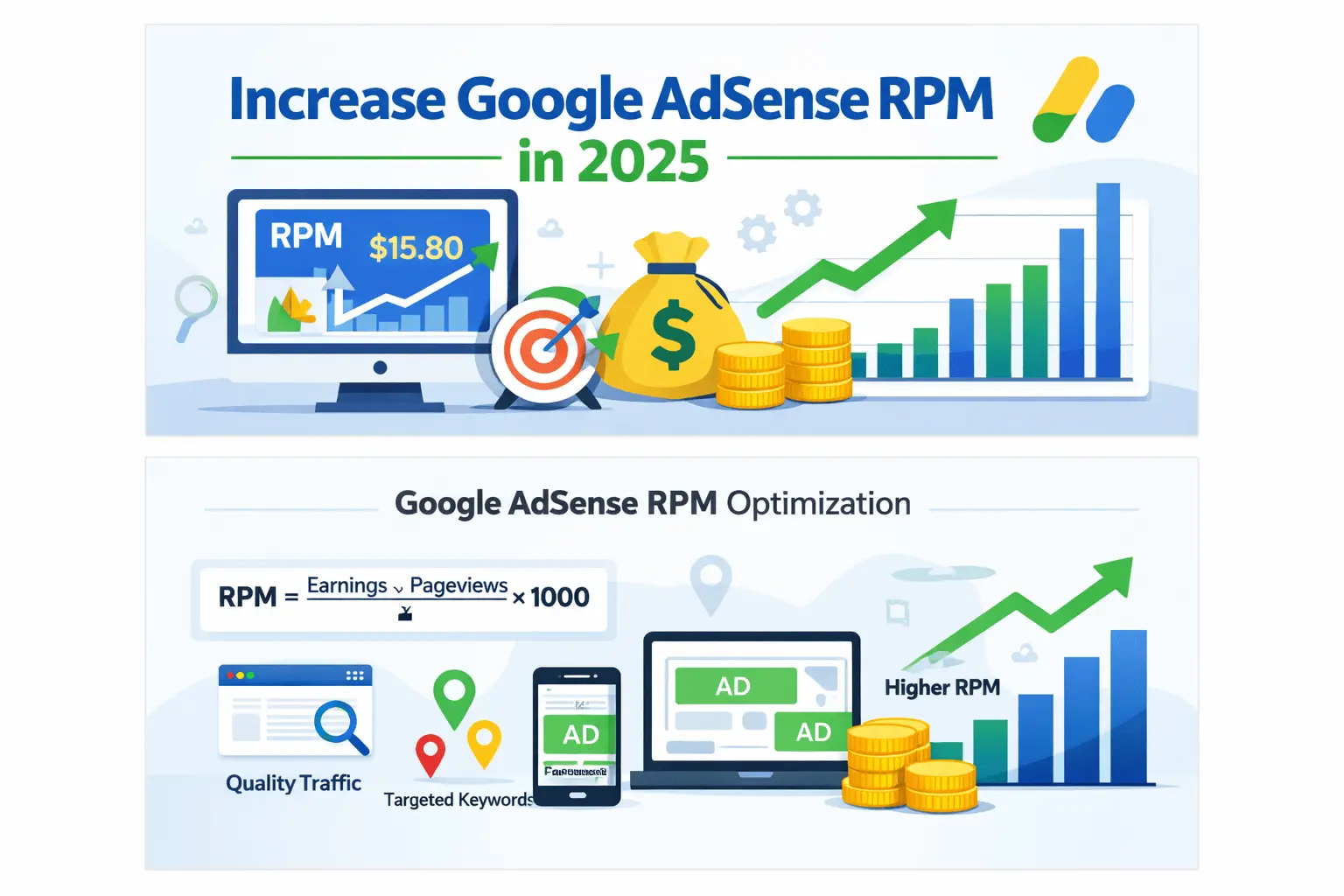
Page RPM uses a different basis: estimated earnings divided by page views, multiplied by 1,000. It helps you compare revenue relative to page-view volume. Keep that denominator separate from users, sessions and ad impressions.
| Measurement | Useful question | Important limitation |
|---|---|---|
| Reported AdSense CPC | How does the click-related metric compare across relevant reports? | Does not describe the whole business result |
| Page RPM | How much estimated revenue corresponds to 1,000 page views? | Can change with traffic and implementation |
| Total estimated earnings | How much revenue did the reporting scope generate? | May differ from finalized earnings |
| Keyword Planner bid ranges | What advertiser bidding information exists for a search term? | Not a publisher payment forecast |
| Search demand estimates | Is there interest in the query under selected settings? | Do not establish achievable traffic or income |
Our CPC, RPM and CTR explanation covers these distinctions. Google also announced the transition to per-impression publisher payments for AdSense for content. Its monetization update explains why total earnings should not be modeled simply as an assumed click count multiplied by a keyword bid.
Why US Traffic Does Not Have a Fixed CPC
A visitor’s country is one part of the audience context. Different pages serve different needs, and the advertising opportunities available to them can vary. A US visitor reading a job application checklist is not necessarily in the same situation as one comparing business software.
Do not assign one universal rate to all US visits. If someone publishes a benchmark, look for the dataset, reporting period, metric and site mix. An individual publisher’s result may be informative without being representative of your website.
Country targeting also does not establish traffic validity. Genuine visitors outside the US are not equivalent to automated traffic. Evaluate whether people want your content and whether the visits are legitimate, then measure the revenue associated with each audience.
Step 1: Establish a Comparable US Reporting Baseline
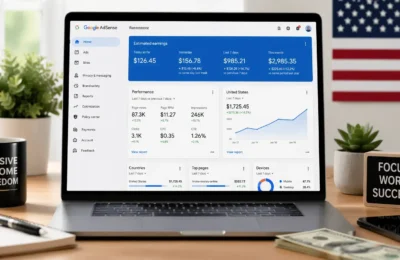
Open the AdSense Countries report, which breaks performance down by visitor country. Choose a complete period and inspect the United States segment. Record the relevant metrics available in that report and preserve the date range, currency and site selection.
Compare the US segment with another complete period using the same scope. Today’s partial report is a weak comparison with a finished day. If your sample is small, use a longer window and acknowledge that a few events can produce unstable averages.
Keep CPC, page views, page RPM and estimated earnings together. Also note important account notices and changes to advertising settings. A spreadsheet with these fields is more useful than a screenshot showing only one attractive number.
Do not take a simple average of country CPC values. Use the platform’s appropriately scoped aggregate rather than giving small and large segments equal weight. For country-specific revenue calculations, read our US AdSense earnings guide.
Step 2: Identify Which Metric Actually Changed
Write a precise problem statement before choosing a solution. “US estimated earnings fell while page views stayed similar” is more useful than “AdSense is low.” It tells you which measurements need inspection and reduces the chance of changing unrelated settings.
| Observed pattern | First checks | Conclusion to avoid |
|---|---|---|
| Earnings fell and page views fell | Traffic volume and landing-page changes | CPC must be the main problem |
| Sitewide CPC changed but US CPC stayed similar | Country mix and reporting scope | The US audience suddenly became less valuable |
| US results changed after an ad configuration edit | Implementation, delivery and the change log | The edit definitely caused the result |
| RPM rose but total revenue fell | Page-view volume and reader experience | Higher RPM alone proves success |
| One short period looks unusually strong | Sample size and longer comparisons | The new result is a stable benchmark |
Check your hypothesis against the data rather than forcing every result into a keyword or niche explanation. If the issue is a sudden CPC decline, the CPC drop troubleshooting guide provides a separate recovery workflow.
Step 3: Check Country and Device Mix
A sitewide average can change when the proportions of visitor groups change. Your US segment might perform similarly while other countries contribute more of the total. This is a mix change, not proof that the same US audience now generates a lower rate.
Review device performance where the report supports it. A shift between mobile and desktop can also affect aggregate results. Inspect each group before deciding that a content or advertising change was responsible.
Use the country RPM guide for country comparisons and the mobile versus desktop RPM guide for device analysis. Neither dimension should be treated as a fixed ranking of visitor quality.
Where you cannot obtain a reliable combined breakdown, keep the limitation visible. Do not allocate revenue to particular pages, queries or traffic sources simply because another tool shows visits from those groups. The attribution must be supported by your reporting setup.
Step 4: Interpret Keyword Data Correctly
Keyword tools can help identify search questions and advertiser activity. Google Keyword Planner’s historical top-of-page bid ranges concern search advertising under selected settings. They are not a quote for the ads that will appear on your article.
Keep the country, reporting period, currency and original metric name with your research. Google’s Keyword Planner documentation also distinguishes advertiser competition from other measurements. High advertiser competition does not establish organic ranking difficulty.
Consider “resume writing services” and “how to write a resume with no experience.” The first suggests researching a service; the second suggests wanting practical instruction. Their audiences and suitable article formats differ. A larger bid estimate would not justify replacing the tutorial with a service comparison if your readers need the tutorial.
Use our keyword research guide for the process. For an employment-focused website, the career keyword ideas guide provides seed phrases to validate, without claiming guaranteed publisher rates.
Step 5: Improve Audience Fit Within Your Existing Subject
Start with the topics your website can answer well. A career blog can improve eligibility explanations, application instructions and role comparisons. It does not need to become an insurance or legal website simply because an advertiser research tool displays larger bids in those categories.
Make US-specific information substantive. Describe relevant location restrictions, available services, currency or application conditions when they matter to the question. Adding “USA” repeatedly to a generic article does not establish usefulness for US readers.
Inspect the existing page against its actual reader task. Are key conditions missing? Are sources outdated? Is a comparison based on meaningful criteria? Improve these weaknesses before expanding into unrelated subjects.
The blog topic selection guide helps evaluate evidence and maintenance needs. A useful editorial choice needs audience fit and reliable information as well as potential advertising interest.
Step 6: Check Ad Implementation and Reader Usability
Review representative pages on mobile and desktop. Confirm that readers can reach the answer, use menus and follow important buttons. Inspect changes made by your theme, advertising plugin or other integrations, especially after a redesign.
Check whether advertising code is being inserted by more than one method. Record the current implementation and review account notices. A technical delivery issue requires an implementation fix rather than another list of high-CPC keywords.
Ad visibility, click behavior and CPC are different measurements. A layout change may affect advertising performance, but you should measure its result rather than assuming that moving a unit above the fold raises the price of a click.
Improve readability when it helps the reader. Add a missing explanation or useful diagram, not extra paragraphs solely to create more ad space. Internal links should lead to a relevant next resource; they do not set advertiser bids or guarantee a CPC increase.
Step 7: Review Blocking Controls Carefully
Blocking controls provide editorial options for ads you do not want on your site. They are not a reliable shortcut for eliminating “low-paying ads” and forcing higher rates. Google warns that blocking can negatively affect earnings by reducing the ads able to compete.
Review Google’s allow-and-block guidance before making broad changes. Use the control appropriate to the specific concern, and document why the restriction exists. Retain necessary policy and audience protections while avoiding unsupported assumptions about revenue.
If a relevant setting can be tested through an available experiment, evaluate it there. A result from one configuration or website does not establish that every publisher should block the same categories. Keep the decision tied to your requirements and measured outcomes.
Step 8: Compare Genuine Traffic Sources Without Stereotypes
Search, social, referral and newsletter visitors can arrive with different expectations. Those differences deserve investigation, but a channel label does not establish a fixed CPC. A relevant newsletter visit may be more useful than an unrelated search visit.
Use supported reporting to evaluate source performance. If your setup provides visits but no reliable revenue attribution for a source, describe that limitation. Avoid presenting a traffic report as though it measured source-level AdSense earnings.
Traffic validity is a separate issue. Do not click your own ads, request support clicks or use services designed to inflate advertising activity. Review our invalid traffic guide when investigating suspicious activity or account notices.
Genuine international traffic is not automatically low quality. If a page attracts readers outside its intended market, assess whether the information serves them and whether the page needs clearer scope. Do not equate geography with fraudulent behavior.
Step 9: Run a Controlled Test
Choose one specific hypothesis after the diagnostic checks. For example: “This supported ad-setting variation may improve revenue without making navigation harder.” Record the original configuration, proposed change and the results you will inspect.
Google’s AdSense experiments compare supported settings by splitting traffic between an original and a variation. Check the experiment type and automatic winner settings before starting. Not every editorial or technical change can be tested with that feature.
Review the experiment’s revenue result alongside usability and relevant reporting. Wait for sufficient evidence rather than declaring success after one day. An inconclusive result is useful information: it means the available evidence does not justify a confident claim.
For content changes outside the experiment feature, keep a dated record and compare suitable periods. Recognize that traffic, seasonality and other changes can affect the outcome. A before-and-after comparison can suggest a relationship without proving that the edit caused it.
Higher CPC Does Not Automatically Mean More Revenue
CPC is one reported rate, while earnings depend on the activity and advertising performance within the reporting scope. If the rate rises while traffic falls, your total income may still decline. Review the complete result before celebrating a larger number.
Here is a hypothetical example using page RPM, not a claim about any publisher’s CPC or earnings:
| Period | Page views | Assumed page RPM | Calculated earnings |
|---|---|---|---|
| A | 10,000 | $4 | $40 |
| B | 6,000 | $5 | $30 |
The normalized rate improved, but calculated earnings fell because page views were lower. This arithmetic illustrates why a rate and a total answer different questions. The same discipline applies when CPC is the metric attracting your attention.
Use the official page RPM definition for calculations. Keep forecast assumptions separate from measured results, and identify whether you are reviewing estimated or finalized revenue.
Keep a Practical Optimization Log
Your log should make each decision understandable later. Record the observation, reporting scope, hypothesis, change, date and result. Include a note about whether the evidence supported the hypothesis and whether the reader experience remained acceptable.
- Observation: identify the exact metric and segment that changed.
- Baseline: preserve the comparable period and original settings.
- Hypothesis: explain why a specific change might help.
- Action: record the setting or page edited.
- Evaluation: review revenue, relevant rates, traffic and usability.
- Decision: retain, revert, investigate further or mark inconclusive.
For search-related changes, use the SEO performance monitoring guide. Search data helps evaluate discovery; it does not independently measure the advertising value of every keyword.
Frequently Asked Questions
Can I manually set my AdSense CPC?
No. Publishers cannot choose a guaranteed payment rate. You can improve the site, review relevant settings and evaluate performance, but advertiser decisions and the advertising system determine the available outcomes.
Does a high Keyword Planner bid mean I will earn that amount?
No. Keyword Planner advertiser metrics concern search advertising. They do not quote the publisher payment for an article visit or an ad shown on your website.
Will US traffic always have the highest CPC?
No universal rule applies to every publisher or period. Inspect your country reporting and compare relevant segments. Do not assume a fixed rate from the visitor’s location.
Should I remove every topic with a lower CPC?
No. A topic can serve readers, attract useful traffic and support other pages. Assess total revenue, editorial purpose and maintenance needs rather than deleting content based on one rate.
Do longer articles and internal links increase CPC?
They do not guarantee a higher CPC. Add detail and links when they help readers complete a task. Evaluate search and monetization results separately.
Should I block categories to force higher-paying ads?
Broad blocking can reduce advertising competition and earnings. Use controls for a defined reason and test supported changes where appropriate, rather than assuming that fewer categories produce a better rate.
Which result matters most when evaluating a change?
Review the complete outcome: relevant revenue, page-view volume, normalized performance and reader usability. CPC can help with diagnosis, but it should not be the only success measure.
Choose Your Next Action From the Evidence
Confirm the affected metric, inspect the US segment and check audience mix before editing the site. Then choose one justified improvement and record its outcome. For the broader publishing process, follow our AdSense website roadmap for US readers. A useful optimization process improves decisions even when a test does not produce a higher CPC.