

Finding high CPC keywords for career blogs starts with understanding what readers need and what the available keyword data actually measures. A person comparing certification costs, choosing a resume service or researching a career change has a different goal from someone browsing general job advice. Those differences should shape your keyword research and your article.
This guide provides career-related keyword ideas, a practical validation process and a way to assign each topic to the right page. The examples are seed keywords to research, not a verified ranking of the highest-paying terms. No keyword in this guide comes with a guaranteed CPC, ranking or AdSense income.
If you are new to monetization, start with the Google AdSense guide. Here, the focus is narrower: choosing useful career queries and turning them into a manageable content plan.
Quick Answer: Which Career Keywords Should You Research?
Start with specific queries about professional training, certification costs, resume services, interview coaching, career transitions and clearly defined job options. These topics can involve readers making purchasing or employment decisions. Check current advertiser data, inspect the search results and confirm that your website can answer the question accurately before choosing a keyword.
A keyword with a large advertiser bid may still be unsuitable for your blog. It could target employers rather than job seekers, require specialist knowledge or return search results dominated by service providers. A useful content opportunity needs audience fit, reliable evidence and a distinct purpose as well as potential advertiser interest.
What Does “High CPC” Mean for a Career Blog?
CPC means cost per click. In advertiser keyword research, it describes a cost associated with advertising clicks. Publishers also encounter CPC in monetization reports, but an advertiser’s search keyword estimate does not tell you what your career article will earn.
Keep these measurements separate when reviewing keyword opportunities:
| Measurement | What it helps you understand | What it does not establish |
|---|---|---|
| Historical top-of-page bid range | Past advertiser bidding for search ads under selected settings | Your website’s future ad earnings |
| Forecast average CPC | An estimated advertiser click cost within a forecast | A fixed payment for visits to your article |
| Advertiser competition | Relative advertiser activity for a keyword | Organic SEO difficulty |
| Search demand | Estimated interest in the query under the selected research settings | The traffic your website will capture |
| Page RPM | Your estimated publisher revenue per thousand page views | A guaranteed return from publishing another article |
Google explains the advertiser measurements in its Keyword Planner forecasts and historical metrics documentation. For the publisher-side terminology, read our explanation of AdSense CPC, RPM and CTR.
Career Keyword Ideas to Validate
The following groups give you a starting research list. None of the phrases below has a verified bid, search volume or profitability rating in this article. Add current data from your chosen tool and market before deciding which topics deserve a page.
| Keyword group | Seed phrases | Reader’s likely task |
|---|---|---|
| Resume services | resume writing services; resume review service; resume writer for career change; professional resume writing cost; executive resume services | Compare professional help, pricing and suitability |
| Career training | project management certification cost; IT certification for beginners; data analyst certificate online; bookkeeping certification online; medical coding training requirements | Understand training routes, requirements and costs |
| Career coaching | career coaching services; interview coaching online; career change coach; interview coaching cost; career coaching for recent graduates | Decide whether a service fits a specific problem |
| Defined job searches | remote customer service jobs USA; evening remote jobs USA; online part-time jobs USA; remote jobs with paid training; remote jobs without phone calls | Find suitable work and understand eligibility |
| Career transitions | how to become a data analyst; bookkeeping career requirements; project coordinator career path; IT support career change; customer service to account management | Compare entry routes and identify skill gaps |
| Freelance business tools | invoicing software for freelancers; freelance project management tools; time tracking for freelancers; portfolio website builder; freelance contract management tools | Choose tools for managing professional work |
1. Resume and Application Services
Resume keywords can support several different article types. “Resume writing services” suggests comparison or purchasing research, while “how to write a resume with no experience” suggests a practical tutorial. A paid-service comparison should explain who might benefit, what deliverables are included and which questions to ask before buying.
Useful comparison criteria include revision limits, turnaround time, writer qualifications, privacy practices and whether the service handles your industry. Do not label a service “best” solely because it appears in a keyword tool. If you have not purchased or tested it, describe the comparison as desk research and identify the sources used.
2. Professional Training and Certifications
Certification queries often contain specific decisions: whether someone is eligible, what an examination costs or whether a course matches a career goal. Separate preparation courses from the certification itself. Readers need to know which organization awards the credential and whether an advertised course includes the examination fee.
A useful article can compare prerequisites, study format, assessment requirements, renewal obligations and total listed costs. Verify those details with the relevant provider or credentialing organization. Avoid presenting a certificate as a guaranteed route to employment, promotion or a particular salary.
3. Career and Interview Coaching
Coaching topics work best when the reader’s problem is clear. A recent graduate preparing for a first interview may need different help from an experienced professional changing industries. Research phrases that describe the situation, service format or cost instead of relying entirely on the broad phrase “career coaching.”
Explain how to assess a coach’s relevant experience, session structure and written terms. Include questions readers can ask before paying. Be careful with testimonials and success rates: a provider’s promotional statement should not become your independent finding without supporting evidence.
4. Specific Remote and Part-Time Job Queries
Job seekers often specify a schedule, location, employment type or communication preference. These details make useful research modifiers because they change what a suitable answer looks like. “Evening remote jobs” needs information about working hours, whereas “remote customer service jobs” needs role requirements and application guidance.
Review our customer service remote jobs guide for a role-specific example. If you publish live vacancies, record when each employer listing was checked and remove or update closed opportunities. A keyword containing “hiring now” creates a continuing verification responsibility.
5. Career Transition and Qualification Queries
Career-change readers need a realistic route from their current situation to a new role. An article should explain transferable skills, typical qualifications, practical experience and application preparation. Make the difference between a possible entry route and a mandatory requirement clear.
Salary information requires extra care. Identify the country, occupation, reporting period and statistic used. A national occupational median does not establish the starting pay for a remote beginner. Use relevant official labor data and current employer information when making concrete comparisons.
6. Tools for Freelancers and Independent Professionals
Software queries can fit a career blog when they serve an audience you already help. A freelancer may need invoicing, time tracking or a portfolio tool. Describe the work problem first, then compare features such as client access, exports, payment integrations and pricing limitations.
Keep the reader identity consistent. “Recruitment software for small businesses” targets an employer purchasing a system; “best job boards for remote workers” targets a job seeker. Both relate to employment, but they need different expertise, examples and content. Do not add employer software topics simply because their bid estimates look attractive.
How to Validate Keywords Before Publishing
Step 1: Define the Reader and Market
Write a one-sentence audience definition before opening a keyword tool. For example: “US-based job seekers looking for part-time customer support work after normal office hours.” This helps you choose useful modifiers and exclude queries aimed at employers, overseas applicants or full-time daytime workers.
Specify the country and language used for research. A broad worldwide figure can hide important differences in eligibility, terminology and reader needs. Your article should match the market you can support with reliable information.
Step 2: Record the Research Settings
Use Keyword Planner or another suitable research tool to investigate the seed phrases. Keep the location, language, network selection, reporting period and currency with your export. Preserve the original column labels so you can distinguish a historical bid range from a forecast average CPC.
Google’s historical top-of-page low and high bid ranges approximately represent the 20th and 80th percentiles. Its competition field measures advertiser competition. Neither field provides an organic ranking-difficulty score. Missing values should stay marked as unavailable; do not replace them with invented estimates.
Step 3: Inspect the Search Results
Search the phrase and inspect the kinds of pages returned. Are they employer vacancies, service providers, course catalogs, comparison articles or explanatory guides? Record the dominant format and the questions those pages answer. This helps you judge whether your proposed article fits the reader’s task.
Look for an information gap you can address with evidence: unclear fees, missing eligibility conditions, confusing time zones or an incomplete application checklist. An opportunity needs more than a longer article. Identify what your page will make easier to understand or do.
Step 4: Check Your Existing Pages
Search your own website for the topic and review relevant pages in Search Console. If an existing article already answers the same question, improving it may be more useful than creating another URL. Slightly different wording does not automatically justify a separate page.
For the broader tool workflow, use our AdSense keyword research guide. Keep a written decision beside every candidate: update an existing page, create a distinct article, combine related ideas or postpone the topic.
Match Each Keyword to One Clear Page Purpose
Keyword ownership is an editorial decision about which page should provide the main answer. It helps prevent your website from publishing several introductions to the same topic while leaving readers’ specific questions unanswered. Related pages can still mention the subject and link to the main guide.
| Query or topic | Suggested page purpose | Scope to keep clear |
|---|---|---|
| Work-from-home jobs | Broad role discovery guide | Overview of job categories and entry considerations |
| Remote customer service jobs | Role-specific guide | Support duties, requirements and application steps |
| Evening remote jobs | Schedule-specific guide | Working hours, time zones and shift suitability |
| Online part-time jobs | Employment-hours guide | Part-time arrangements, workload and availability |
| Remote job boards | Search-platform comparison | Where and how readers search for opportunities |
| Career keyword research | Publisher planning guide | Keyword ideas, validation and content ownership |
For example, the work-from-home jobs guide can introduce several roles. It can then direct readers with specific scheduling needs to evening remote jobs or readers seeking fewer working hours to online part-time jobs.
Before splitting a topic, ask whether the new page needs a different answer, evidence set or decision process. If two proposed articles would contain substantially the same advice, combine them and use the variations naturally within one useful page.
Build a Keyword Research Worksheet
A worksheet makes your reasoning reviewable. Keep enough information to understand why a keyword was selected and whether its data is still relevant. You should be able to revisit the decision without reconstructing the entire research session.
- Keyword and audience: the exact phrase and intended reader.
- Research settings: country, language, network, period and currency.
- Tool data: available demand estimates and the exact bid metric names.
- Search intent: the task the reader wants to complete.
- Existing URL: the page that already covers the topic, if any.
- Evidence: sources, examples or tests needed to support the article.
- Maintenance: details likely to change and the responsible reviewer.
- Decision: update, create, combine, postpone or reject.
Consider a hypothetical choice between a certification-cost article and an evening-jobs guide. You have current official fee information for the certification but have not checked any evening vacancies. The certification article may be easier to support now. That is an evidence-based publishing decision, even before comparing the bid data.
If the evening-jobs page already exists, record an update task instead of creating a second article around a small keyword variation. Keep your worksheet as a content decision record, not simply a list sorted by the largest number.
Choose Topics You Can Answer Well
Review each candidate through five questions: Does it fit your audience? Is there evidence of demand? Can you provide a distinct answer? Can you verify the important details? Can you maintain the page? These questions help prevent advertiser metrics from driving the entire editorial plan.
A specific query with a clear reader problem can be more practical than a broad phrase requiring a large comparison database. Start with topics where your evidence and explanation are strongest. Expand when you can support the additional scope, rather than publishing every related phrase at once.
Our guide to blog topics with potential for higher AdSense RPM covers article selection across topic areas. This career keyword guide helps you refine the phrases and page purposes within the employment and professional-development audience.
Turn a Keyword Into a Useful Article Brief
After selecting a topic, write a brief before drafting. Include the reader’s situation, the main question, the promised answer, supporting questions and sources. State what the article needs to verify rather than filling an outline with generic headings.
For “resume writing service cost,” a useful brief might cover listed packages, included revisions, additional charges, turnaround and questions to ask before ordering. For “remote jobs with paid training,” it should distinguish employer-provided onboarding from courses applicants must purchase independently.
Job-search content should help readers evaluate opportunities safely. Link to suitable remote job boards when discussing search platforms, and explain verification using the remote job scams guide when an article discusses offers, recruiter messages or application requests.
Use the primary phrase naturally in the title, opening explanation and relevant section. Supporting terms should describe the actual subject. An article about certification costs does not need repeated references to “high CPC” because its reader is choosing training, not researching publisher monetization.
Measure Actual AdSense Results After Publication
Separate search performance from monetization performance. Search Console can show the queries and pages receiving Google impressions and clicks. AdSense reporting helps you evaluate estimated earnings and publisher metrics. A keyword-tool estimate cannot replace either source.
Google defines page RPM using this calculation:
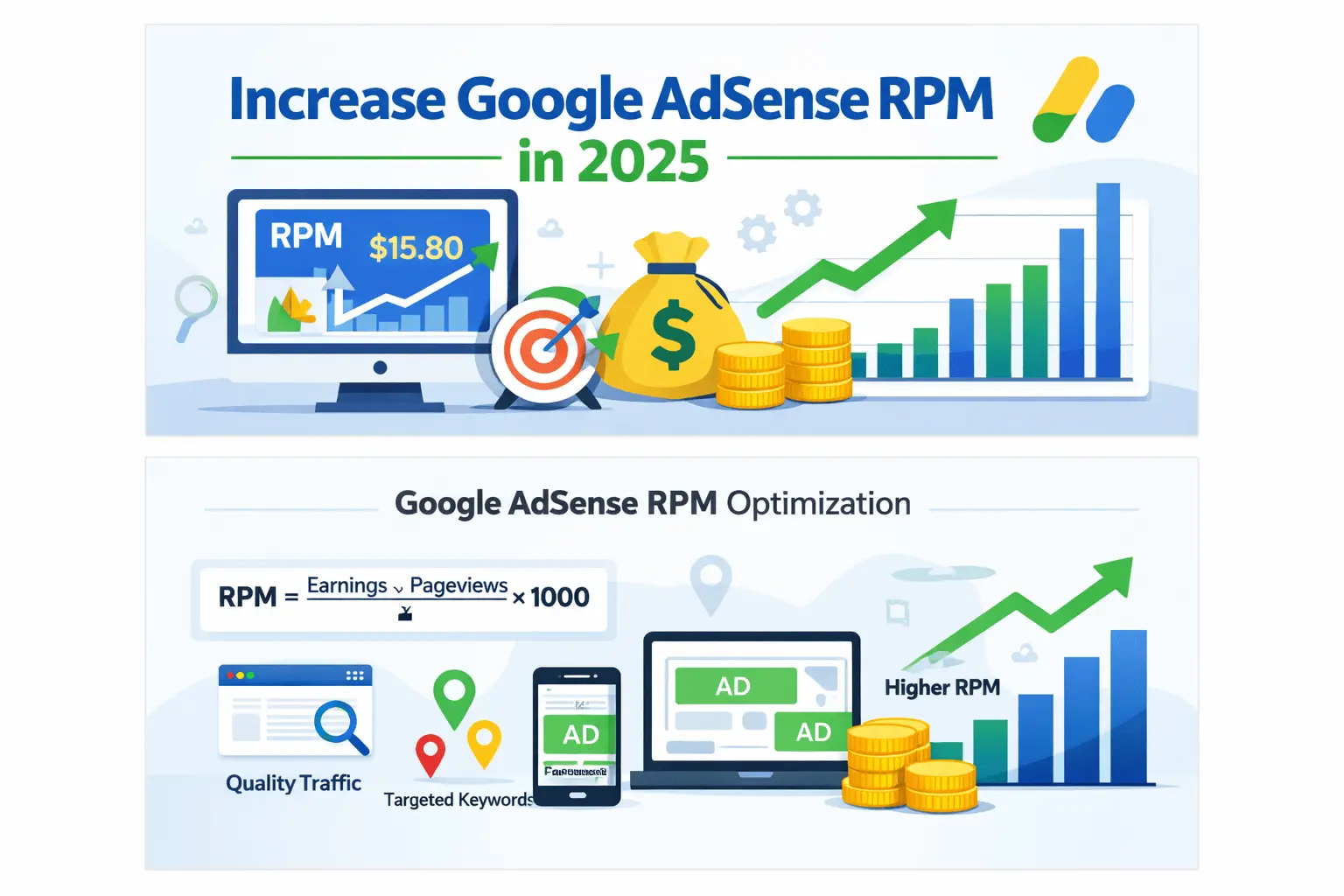
Page RPM = estimated earnings ÷ page views × 1,000.
For illustration, $2 in estimated earnings from 1,000 matching page views produces a $2 page RPM. This is a hypothetical calculation, not a career-blog income forecast. Use earnings and page views from the same reporting scope and period, following the official page RPM definition.
Compare similar periods and consider changes in country mix, device mix, traffic sources and ad configuration. A small sample can produce unstable results. If page-level revenue is unavailable in your reporting setup, do not assign sitewide earnings to individual articles as though they were measured.
When comparing content groups, calculate RPM from their combined earnings and page views rather than taking a simple average of individual RPM values. Read the AdSense earnings per 1,000 views guide for the revenue calculation, and the AdSense strategy for job blogs for the wider publishing and monetization process.
Common Career Keyword Research Mistakes
- Inventing CPC tables: publishing precise dollar values without a source, market, metric and research date.
- Confusing audiences: targeting employer purchasing queries on a page written for job seekers.
- Ignoring page overlap: creating separate articles for phrases that need the same answer.
- Using unsupported salary claims: treating broad salary statistics as beginner or remote-job pay.
- Publishing stale opportunities: keeping “hiring now” claims after employer listings close.
- Choosing only by bids: overlooking reader fit, evidence quality and maintenance work.
- Promising monetization outcomes: presenting a keyword as a guaranteed way to increase income.
Frequently Asked Questions
What are high CPC keywords for career blogs?
They are career-related search terms associated with comparatively higher advertiser click-cost or bid data under specified research settings. Resume services, professional training and career coaching are groups worth investigating. Their actual values must be checked for the relevant market and metric.
Are remote job keywords always high CPC?
No. Remote-job phrases vary by location, role, audience and advertiser activity. A broad job query and a specific service comparison can have different commercial intent. Validate individual phrases instead of assigning one CPC label to the entire category.
Can Keyword Planner predict my AdSense earnings?
No. Its advertiser research and forecast metrics do not establish what your website will earn. Use the data as one input when selecting topics, then evaluate actual publisher performance through your available AdSense reports.
Should every keyword have a separate article?
No. Group phrases that share the same reader task and need substantially the same answer. Create a separate page when the intent, required evidence or practical guidance is meaningfully different. Check existing content before adding another URL.
Which should I prioritize: search volume or advertiser bids?
Neither should decide the topic alone. Consider audience fit, demand, search intent, your ability to provide evidence and the work needed to maintain the article. Bid data adds commercial context but does not establish ranking potential or income.
How often should I review career keyword content?
Review changing details according to their risk of becoming outdated. Vacancies, fees, eligibility requirements and product pricing need closer attention than general explanations. Keep a source-check record and update the article when the information changes.
Build Your Next Career Article From Evidence
Select one keyword group that fits your readers. Validate its available data, inspect the search results and assign it to an existing or proposed page. Gather the evidence needed to answer the question, then publish an article with a clear purpose and a realistic maintenance plan.
The useful outcome of career keyword research is a better publishing decision: a topic your audience needs, a page that adds something specific and a result you can evaluate with actual search and monetization data.