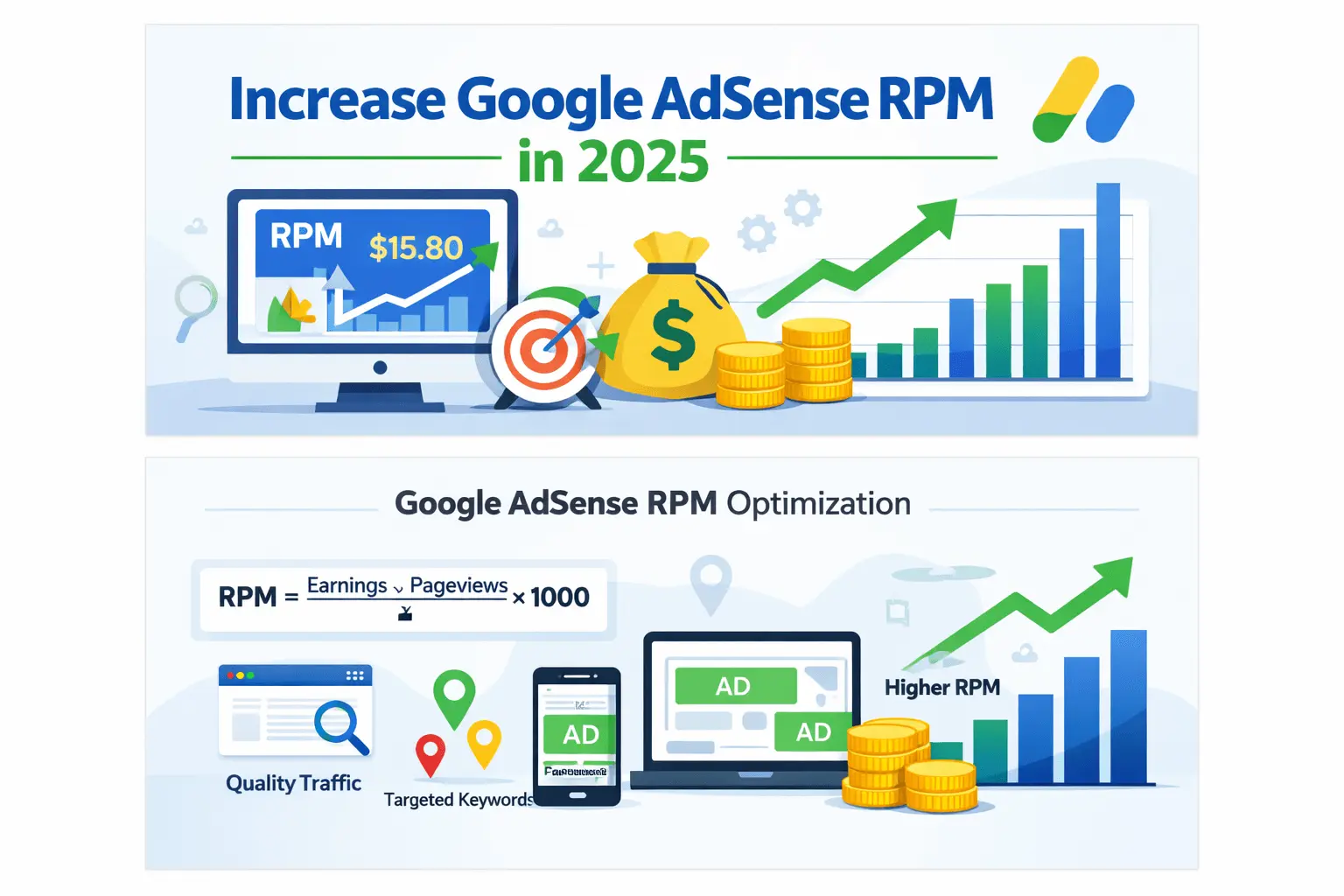


How much does AdSense pay per 1000 views? There is no fixed Google AdSense rate for 1,000 views. Your result is your Page RPM: estimated earnings divided by pageviews, multiplied by 1,000. For example, a $2 Page RPM produces about $2 from 1,000 pageviews, while a $10 Page RPM produces about $10. These are calculation examples—not promised rates.
Actual earnings can change by website topic, visitor location, device, advertiser demand, season, ad format, viewability, traffic quality and other factors. Even two pages on the same site can earn different amounts. The most reliable benchmark is therefore your own AdSense report over a meaningful period, not a universal rate quoted by another publisher.
This 2026 guide explains Page RPM, shows safe calculation examples, compares the main AdSense metrics and provides practical ways to test improvements without encouraging accidental clicks or making unrealistic income claims.
Quick Answer: How Much Does AdSense Pay Per 1000 Views?
Google does not publish a standard payment for every 1,000 pageviews. If your Page RPM is $1, then 1,000 pageviews would represent about $1 in estimated earnings. At a $5 Page RPM, the same traffic would represent about $5; at $15, about $15. Your dashboard may show a lower or higher figure, and estimated earnings can later be adjusted.
| Example Page RPM | 1,000 pageviews | 10,000 pageviews | 100,000 pageviews |
|---|---|---|---|
| $1 | $1 | $10 | $100 |
| $3 | $3 | $30 | $300 |
| $5 | $5 | $50 | $500 |
| $10 | $10 | $100 | $1,000 |
| $20 | $20 | $200 | $2,000 |
Use the table by selecting a Page RPM scenario and multiplying it by your pageviews in thousands. Do not treat any row as a prediction. For a broader introduction to the platform, read the complete Google AdSense guide for 2026.
What “Per 1000 Views” Means in AdSense
In most website discussions, “views” means pageviews, not unique visitors and not ad impressions. One visitor can open several pages, while one page can contain more than one ad. That is why the phrase “AdSense pay per 1,000 views” is only useful when the underlying metric is clear.
Google defines Page RPM as estimated earnings divided by pageviews and multiplied by 1,000. Google also describes RPM as an estimated metric rather than the amount actually paid for every 1,000 impressions. See Google’s official explanations of Page RPM and revenue per thousand impressions.
The Page RPM Formula
Page RPM = (Estimated earnings ÷ Pageviews) × 1,000
Suppose a site records 25,000 pageviews and $125 in estimated earnings:
- Divide $125 by 25,000 pageviews: 0.005.
- Multiply 0.005 by 1,000.
- The resulting Page RPM is $5.
This calculation describes what happened during that reporting period. It does not guarantee a $5 Page RPM next month.
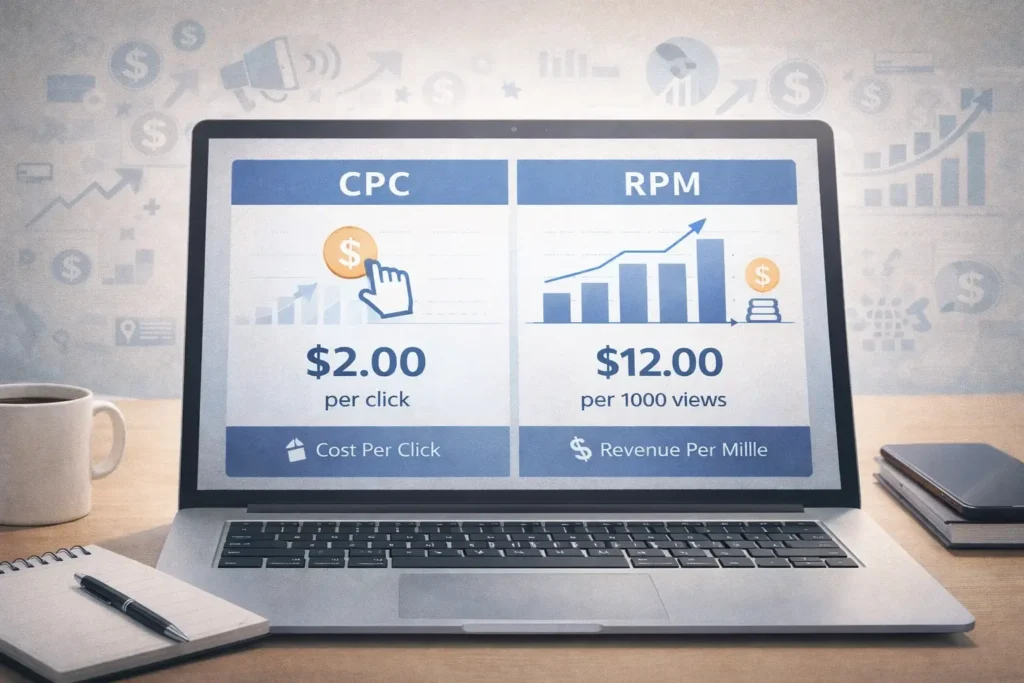
Page RPM, Impression RPM and CPC: What Is the Difference?
| Metric | What it measures | Best use |
|---|---|---|
| Page RPM | Estimated earnings per 1,000 pageviews | Comparing how pages or traffic segments monetize |
| Impression RPM | Estimated earnings per 1,000 ad impressions | Evaluating ad-impression performance |
| CPC | Publisher earnings associated with an ad click | Understanding click-based performance |
| CTR | The percentage of eligible impressions that generate clicks | Monitoring engagement and unusual changes |
Page RPM is usually the clearest metric for answering how much AdSense pays per 1,000 pageviews because it connects revenue to the pages readers viewed. CPC alone cannot answer the question: a site can have a strong CPC but few valid clicks, or a lower CPC with more impressions and different total revenue.
Why AdSense Earnings Per 1000 Views Vary
No single factor sets your Page RPM. The following variables interact, so changing one item does not guarantee higher income.
1. Visitor Location and Advertiser Demand
Advertisers value audiences according to their campaign goals, competition and potential customer value. A visitor’s country can affect the ads available in the auction, but country alone does not determine revenue. Topic, intent, device, season and the individual ad auction still matter.
For that reason, statements such as “USA traffic always earns $20 RPM” are unreliable. A US entertainment page and a US business-software comparison page can perform very differently. For a more careful country-level explanation, see BlogerHub’s AdSense RPM by country guide.
2. Topic and Search Intent
Some topics have more commercial advertiser competition than others. A reader comparing paid business software may be closer to a purchase than someone reading a general entertainment article. However, selecting a topic only because it is described as “high CPC” is not a reliable strategy. You still need expertise, original value and an audience you can serve responsibly.
If you are planning a content cluster, use this overview of AdSense niches for a US audience as research—not as an earnings promise.
3. Device, Layout and Ad Viewability
Mobile and desktop pages have different screen sizes, layouts and user behavior. Ad format, position and whether an ad becomes viewable can affect performance. More ads do not automatically mean more revenue: an overloaded layout may make the page difficult to use, slow it down or create accidental-click risks.
4. Traffic Quality
Organic visitors who deliberately choose a relevant result may behave differently from untargeted, incentivized or purchased traffic. Google classifies clicks or impressions that artificially inflate advertiser costs or publisher earnings as invalid traffic. This can include clicking your own ads, repeated clicks, encouraging clicks and automated traffic.
Never click your live ads, ask readers to support you by clicking, place ads where they may be mistaken for navigation, or buy questionable traffic. Review Google’s official invalid traffic guidance and AdSense Program policies.
5. Seasonality and Reporting Period
Advertiser budgets and competition can change during the year. A single high-earning day may be caused by normal volatility and should not become your permanent benchmark. Compare the same pages and traffic segments across longer periods—such as 28 or 90 days—and note seasonal events before drawing conclusions.
6. Page Speed and User Experience
Ads can affect loading, interactivity and layout stability if implemented poorly. Reserve space for ad slots where practical, compress images, avoid unnecessary scripts and test real mobile pages. Google’s web.dev guidance recommends balancing monetization with Core Web Vitals rather than treating ad load and performance as separate concerns.
Does AdSense Pay More for 1000 Views From the USA?
US traffic may produce stronger advertiser competition for some queries, but there is no official fixed US rate. AdSense does not promise a particular Page RPM based on country. A useful answer must be conditional: US traffic can monetize differently, yet its value depends on the page topic, visitor intent, device, season, ad setup and auction demand.
Instead of inserting an assumed “USA RPM” into an income calculator, open AdSense reporting and compare your own country breakdown over the same date range. Use enough data to reduce daily noise, and do not confuse correlation with proof that geography alone caused the change.
How to Estimate Your AdSense Earnings
You can estimate future earnings with your historical Page RPM, but present the result as a scenario rather than a promise.
- Choose a meaningful period. Use a recent 28- or 90-day report instead of your best day.
- Record estimated earnings and pageviews. Keep the date range and reporting currency consistent.
- Calculate Page RPM. Divide earnings by pageviews, then multiply by 1,000.
- Create low, base and high scenarios. Use a reasonable range around your own historical result.
- Recheck assumptions. Traffic mix, seasonality or a redesign can make the old RPM less representative.
Example Using Historical Data
Imagine your last 90 days show 60,000 pageviews and $240 in estimated earnings. Your historical Page RPM is ($240 ÷ 60,000) × 1,000 = $4. If you later receive 100,000 similar pageviews, a simple base scenario is 100 × $4 = $400. A cautious model might also test $3 and $5 Page RPM, producing a $300–$500 scenario range.
The range still is not guaranteed. It assumes your future traffic and monetization conditions resemble the historical period.
How to Improve Page RPM Safely
Focus on reader value, measurement and controlled tests. Avoid shortcuts designed only to force more ad interactions.
Compare Pages and Traffic Segments
Review Page RPM by URL, country, device and traffic source where your reports allow it. Look for patterns across enough pageviews. A high-RPM page with very little traffic is less useful as a benchmark than a stable cluster with meaningful volume.
Improve Content for the Reader’s Intent
Answer the main question early, add original examples, update outdated claims and link to the next relevant guide. Helpful content may attract better-matched visitors and improve engagement, but do not claim that word count or a specific content format automatically increases RPM.
Run Controlled Ad Experiments
Change one meaningful variable at a time and compare revenue with user experience. Google’s Auto ads experiments can compare settings such as ad formats or ad load. Wait for adequate data; a short test can produce misleading results.
Protect Speed and Layout Stability
Measure mobile performance after ad changes. Watch Largest Contentful Paint, Interaction to Next Paint and Cumulative Layout Shift. A revenue change should be judged alongside reader experience, not in isolation.
Build Legitimate, Relevant Traffic
Publish useful topic clusters, strengthen contextual internal links and earn visitors through trustworthy channels. Avoid traffic exchanges, bots and services promising guaranteed ad clicks. For related optimization ideas, see BlogerHub’s guide to improving AdSense CPC and traffic quality, while remembering that no technique guarantees a higher CPC or RPM.
Common AdSense Earnings Mistakes
- Quoting a universal RPM: another publisher’s result may not match your site, audience or period.
- Calling examples “average earnings”: a scenario table is not market evidence.
- Confusing users, pageviews and impressions: each metric counts something different.
- Optimizing only for ad quantity: excessive ads can damage usability and performance.
- Judging one day: daily volatility can create false conclusions.
- Ignoring invalid traffic: artificial or accidental activity can lead to deductions, limits or account action.
- Presenting estimated earnings as final: finalized earnings can differ after adjustments.
How Much Does AdSense Pay Per 1000 Views? FAQs
Is there a minimum AdSense payment for 1,000 views?
No. AdSense does not guarantee a minimum amount for 1,000 pageviews. Your Page RPM is calculated from the estimated earnings and pageviews recorded in your account, so it can vary between sites, pages, countries and reporting periods.
Can 1,000 pageviews earn $10 from AdSense?
Yes, if your Page RPM for that period is $10, then 1,000 pageviews correspond to about $10 in estimated earnings. That is a mathematical example, not a standard AdSense rate or a guarantee that the next 1,000 views will earn the same amount.
What is a good AdSense Page RPM?
There is no universal “good” Page RPM. A useful benchmark is your own comparable historical data. Compare the same type of page, traffic source, country, device and season, then judge revenue together with traffic growth, content quality and user experience.
Do pageviews and ad impressions mean the same thing?
No. A pageview records a viewed page, while ad impressions count individual ads that were served or displayed according to the reporting definition. A page can create multiple ad impressions, so Page RPM and Impression RPM should not be used interchangeably.
Does traffic from the USA always pay more?
No. US visitors may attract different advertiser demand, but country does not guarantee a particular rate. Topic, commercial intent, device, season, auction competition, ad setup and traffic quality can all change the final result.
Can adding more ads increase Page RPM?
It may change revenue, but more ads can also reduce speed, readability or layout stability. Use controlled experiments, monitor Core Web Vitals and follow AdSense placement policies. Keep ads distinguishable from navigation and never design placements to cause accidental clicks.
Why are estimated and finalized AdSense earnings different?
Google may adjust estimated earnings before finalization, including for invalid activity. Therefore, dashboard estimates and Page RPM calculations should be treated as provisional until earnings are finalized.
Final Answer
So, how much does AdSense pay per 1000 views? There is no fixed answer. The correct way to estimate it is to use your Page RPM: estimated earnings divided by pageviews, multiplied by 1,000. A $3 Page RPM implies about $3 per 1,000 pageviews, while a $10 Page RPM implies about $10—but both are scenarios, not guaranteed rates.
Build your benchmark from your own 28- or 90-day data, compare like-for-like traffic segments, run controlled experiments and protect the reader experience. Sustainable AdSense growth comes from useful content and valid traffic, not fixed RPM promises or attempts to manufacture clicks.
Next, review the AdSense approval checklist for new blogs or explore the complete AdSense guide.