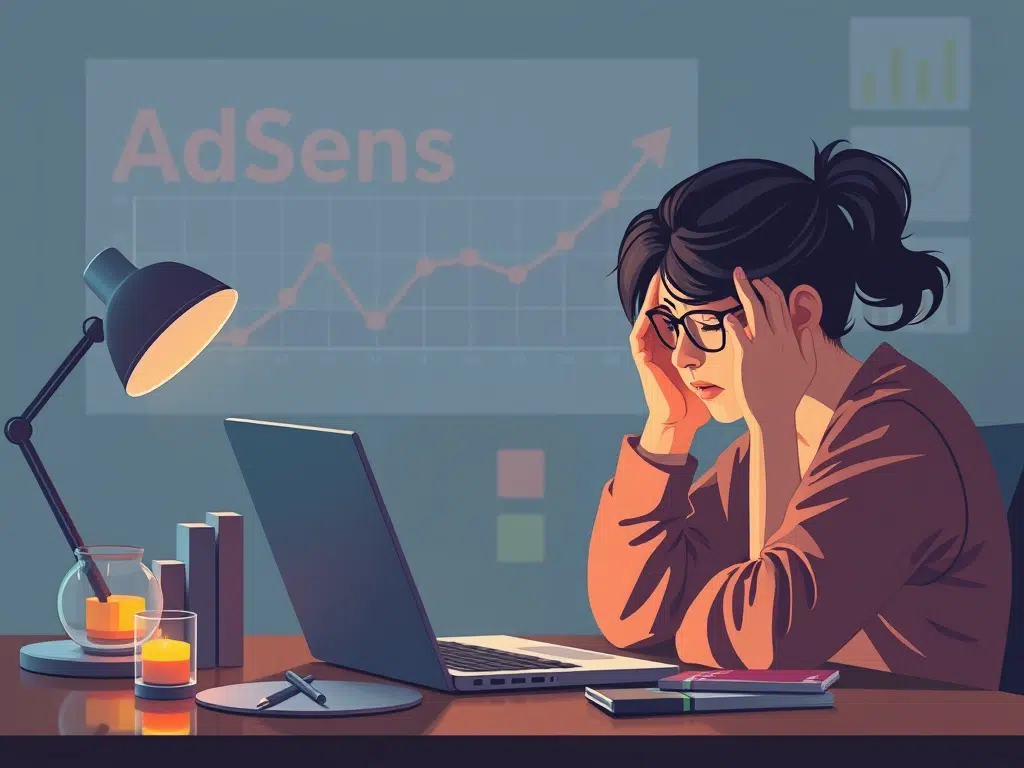
If your AdSense CPC dropped suddenly, you’re not alone. Many publishers experience unexpected CPC decreases—even when traffic appears stable. One week your CPC is $0.80, and the next it falls to $0.20 without any obvious warning.
When AdSense CPC dropped suddenly, the fastest way to recover is to identify whether the change came from GEO, traffic intent, or advertiser seasonality.
A sudden AdSense CPC drop can feel alarming. However, in most cases, it’s neither random nor permanent. CPC fluctuations typically happen due to seasonal advertiser demand, traffic source shifts, GEO changes, ranking updates, or content relevance adjustments.
It’s important to understand that a sudden CPC drop is different from consistently low CPC. The causes and recovery strategy are not the same.
In this guide, you’ll learn how to:
- Identify why your AdSense CPC decreased
- Diagnose the real cause using data
- Recover your CPC safely and strategically
- Prevent future sudden drops
If your CPC has always been low rather than dropping recently, read our complete low AdSense CPC fix guide. This article focuses specifically on sudden AdSense CPC drops and recovery.
Contents
- 1 Why Did My AdSense CPC Drop Suddenly in 2026?
- 2 1. Seasonal Advertiser Budget Changes
- 3 2. Traffic Source Shift
- 4 3. Loss of Tier-1 Country Traffic
- 5 4. New Low-Intent Pages Ranking
- 6 5. Ad Placement Changes
- 7 6. Increased Competition in Your Niche
- 8 7. Overblocking Ad Categories
- 9 How to Diagnose When AdSense CPC Dropped Suddenly(Step-by-Step)
- 10 Step 1: Check the Exact Date
- 11 Step 2: Compare Top Pages
- 12 Step 3: Compare Countries
- 13 Step 4: Compare Traffic Source
- 14 Step 5: Compare Ad Units
- 15 Advanced Data Comparison Checklist
- 16 Content Audit Checklist for CPC Recovery
- 17 How to Recover from a Sudden AdSense CPC Drop
- 18 1. Refresh High-Value Pages
- 19 2. Strengthen Commercial Intent
- 20 3. Rebalance Traffic Toward Tier-1 GEO
- 21 4. Optimize Ad Placement Again
- 22 5. Improve Page Experience
- 23 6. Be Patient (Data Recalibration Period)
- 24 CPC Drop vs RPM Drop: Why the Difference Matters
- 25 Seasonal Trends When AdSense CPC Dropped Suddenly (2026)
- 26 Can Google Algorithm Updates Affect AdSense CPC?
- 27 Industry-Specific CPC Fluctuations
- 28 Real Example: CPC Dropped from $1.10 to $0.40
- 29 How to Prevent Future CPC Drops
- 30 Frequently Asked Questions
- 31 Why did my AdSense CPC drop overnight?
- 32 Is a CPC drop permanent?
- 33 How long does recovery take?
- 34 Does Google algorithm affect CPC?
- 35 Should I switch ad networks after a CPC drop?
- 36 Does Niche Saturation Cause CPC Drops?
- 37 When Should You Actually Be Concerned?
- 38 Psychological Mistakes After a CPC Drop
- 39 Final Thoughts: When AdSense CPC Dropped Suddenly
Why Did My AdSense CPC Drop Suddenly in 2026?
Sudden CPC drops usually happen for one of the following reasons.
1. Seasonal Advertiser Budget Changes
Advertiser spending changes throughout the year.
Typical trend:
- Q4 (Oct–Dec): Highest CPC (holiday & end-of-year budgets)
- Q1 (Jan–Mar): Often lower CPC (budget reset period)
- Mid-year fluctuations depending on industry
If your CPC dropped in January or early February, it may be seasonal—not a website issue.
According to Google Ads Help documentation, advertiser bids fluctuate based on competition, seasonality, and expected conversion value.
2. Traffic Source Shift
Check your Google Analytics.
Did your traffic source change?
- Less organic search traffic?
- More social or referral traffic?
- Viral traffic spike?
Search traffic usually has higher commercial intent. Social traffic tends to have lower advertiser value.
Even a 10–15% shift in traffic type can reduce CPC significantly.
3. Loss of Tier-1 Country Traffic
CPC is heavily influenced by GEO.
If your U.S., UK, Canada, or Australia traffic dropped—even slightly—CPC can fall quickly.
Compare:
AdSense → Reports → Countries
Look at last 30 days vs previous 30 days.
If Tier-1 traffic decreased, that’s likely the cause.
To rebuild strong GEO targeting, see our USA high CPC keyword list.
4. New Low-Intent Pages Ranking
Sometimes CPC drops because:
- A new informational article starts ranking
- A low-commercial topic gets most impressions
- Broad keywords replace long-tail buyer keywords
For example:
“how to start blogging” → low intent
“best hosting for bloggers in USA” → high intent
Google shows ads based on page intent. If your ranking pages changed, CPC changes too.
5. Ad Placement Changes
Did you:
- Enable Auto Ads?
- Move ad units?
- Add too many ads?
- Remove a high-performing ad unit?
Even small layout changes can affect advertiser bidding.
For placement optimization, read our best AdSense ad placement guide.
6. Increased Competition in Your Niche
More publishers entering your niche can:
- Increase ad inventory
- Reduce competition per impression
- Lower average bid value
This is common in finance, SaaS, and “make money online” niches.
7. Overblocking Ad Categories
If you blocked too many categories in:
AdSense → Blocking Controls
You may have reduced advertiser competition.
Less competition = lower CPC.
Block carefully. Never over-restrict.
How to Diagnose When AdSense CPC Dropped Suddenly(Step-by-Step)
Before making changes, diagnose properly.
Step 1: Check the Exact Date
Identify the date CPC dropped.
Was it gradual or overnight?
Gradual → traffic shift
Sudden → seasonal or advertiser change
Step 2: Compare Top Pages
AdSense → Reports → Pages
Which pages lost CPC?
Are they:
- Informational?
- From low-CPC GEO?
- Recently updated?
Step 3: Compare Countries
Check:
Last 30 days vs previous 30 days
If U.S. traffic dropped 5–10%, that can reduce CPC noticeably.
Step 4: Compare Traffic Source
Analytics → Acquisition
Look for:
- Drop in organic traffic
- Increase in direct/social traffic
- Changes in referral traffic
Intent shift = CPC shift.
Step 5: Compare Ad Units
Some ad units perform better than others.
Did a high-performing in-content ad lose impressions?
Advanced Data Comparison Checklist
If your AdSense CPC dropped suddenly, don’t rely on assumptions. Use structured comparison.
Compare these metrics:
1. CPC by Page
- Which exact URL lost CPC?
- Is it informational or commercial?
- Did ranking position change?
2. CPC by Country
- Has U.S. traffic dropped?
- Did Tier-3 traffic increase?
Even a small GEO shift can reduce advertiser competition.
3. CPC by Device
- Desktop vs Mobile
- Some niches earn higher CPC on desktop users.
4. CPC by Ad Unit
- Did in-content ads lose impressions?
- Did Auto Ads override manual placements?
Data clarity prevents unnecessary layout changes.
Content Audit Checklist for CPC Recovery
When CPC drops, content relevance is often part of the issue.
Instead of assuming advertiser problems, review your ranking pages carefully using the checklist below:
✔ Ensure the page targets one clear commercial intent.
✔ Include pricing details, cost breakdowns, or comparison tables where relevant.
✔ Confirm the content is updated for 2026 with fresh data and references.
✔ Add GEO signals such as USD pricing, USA-specific tools, or regional context.
✔ Structure headings properly using a clean H2/H3 hierarchy.
✔ Compare depth with competitors and expand thin sections if necessary.
Pages that lack buyer-intent signals tend to attract lower advertiser bids. Strengthening clarity, intent alignment, and topical depth often helps restore CPC naturally over time.
How to Recover from a Sudden AdSense CPC Drop
Once you identify the cause, recovery becomes strategic—not emotional.
1. Refresh High-Value Pages
Update:
- Pricing references
- Comparison tables
- Statistics
- GEO-specific details
Fresh content attracts better ads.
2. Strengthen Commercial Intent
Add:
- Cost breakdowns
- “Best” comparisons
- Pros and cons
- Real examples
Intent improvement increases advertiser relevance.
For long-term intent strategy, see our high CPC keyword strategy guide.
3. Rebalance Traffic Toward Tier-1 GEO
Create content targeting:
- USA
- UK
- Canada
- Australia
Use:
- USD pricing
- Location modifiers
- Region-specific tools
To rebuild strong GEO targeting, see our USA high CPC keyword list.
4. Optimize Ad Placement Again
Try:
- In-content ad after first paragraph
- Mid-article ad
- Clean spacing
- Remove excessive units
Better placement can improve bid competition.
For placement optimization, read our best AdSense ad placement guide.
5. Improve Page Experience
Google rewards:
- Fast loading
- Mobile optimization
- Clean layout
- Clear structure
Page experience affects ad performance indirectly.
6. Be Patient (Data Recalibration Period)
AdSense relies on performance history.
Recovery timeline:
- 30 days: stabilization
- 60 days: improvement
- 90 days: consistent growth
Avoid constant layout changes during this time.
CPC Drop vs RPM Drop: Why the Difference Matters
Not every earnings drop is caused by CPC alone.
Sometimes CPC drops slightly, but RPM remains stable. Other times, both CPC and RPM fall together. Understanding this difference helps you avoid unnecessary changes.
If only CPC dropped:
- Likely seasonal shift
- Advertiser budget fluctuation
- Temporary bidding change
If both CPC and RPM dropped:
- Traffic quality changed
- Tier-1 traffic decreased
- High-intent pages lost rankings
- Ad placement affected engagement
Always check:
AdSense → Reports → Compare CPC and RPM together.
Smart publishers track trends, not daily fluctuations.
Seasonal Trends When AdSense CPC Dropped Suddenly (2026)
Understanding seasonality prevents panic.
Generally:
- January–February → slower budgets
- March–June → moderate
- July–September → fluctuating
- October–December → strongest CPC
Some industries (insurance, finance) perform better at specific times.
If your drop aligns with seasonal pattern, don’t overreact.
Can Google Algorithm Updates Affect AdSense CPC?
Yes — indirectly.
Google algorithm updates don’t change CPC directly. However, they can:
- Change which pages rank
- Shift traffic intent
- Replace commercial pages with informational pages
- Reduce Tier-1 traffic
If an update caused:
- A drop in high-intent keyword rankings
- An increase in broad traffic
- A content quality reevaluation
Then advertiser bidding may decrease.
Check:
- Google Search Console → Performance
- Compare impressions before and after drop
If rankings changed, CPC shift is logical — not mysterious
Search Engine Journal has reported that Google updates can shift ranking intent, which indirectly impacts ad performance and CPC.
Industry-Specific CPC Fluctuations
Different industries experience different seasonal patterns.
Finance & Insurance
- Strong Q4
- Moderate mid-year
- Budget resets in January
SaaS & Software
- Strong during product launch cycles
- B2B budgets fluctuate quarterly
Education
- Higher during admission seasons
- Lower during off-season
Home Services
- Seasonal depending on region (HVAC, roofing, etc.)
Understanding your industry prevents overreaction.
Real Example: CPC Dropped from $1.10 to $0.40
A blog in the SaaS niche saw CPC drop suddenly.
Diagnosis showed:
- 12% drop in U.S. traffic
- Two informational pages started ranking
- Auto Ads replaced manual in-content ads
Fixes applied:
- Updated commercial pages
- Re-added in-content ads
- Created 3 USA-focused articles
Result after 60 days:
CPC returned to $0.95
RPM stabilized
The drop was temporary—not permanent damage.
Quick CPC Drop Diagnosis Table
| Situation | Likely Cause | Action |
|---|---|---|
| CPC dropped in January | Seasonal budget reset | Wait + monitor |
| CPC dropped after layout change | Placement issue | Restore previous setup |
| CPC dropped after traffic spike | Low-intent traffic | Improve keyword targeting |
| CPC dropped after ranking change | Intent shift | Update commercial pages |
Tables increase dwell time + SEO strength.
How to Prevent Future CPC Drops
- Build topical authority
- Focus on buyer intent
- Maintain Tier-1 traffic
- Avoid drastic ad layout changes
- Monitor CPC by page, not site-wide
Track both CPC and RPM together using this RPM optimization guide.
Frequently Asked Questions
Why did my AdSense CPC drop overnight?
Usually due to seasonal advertiser demand, traffic shift, or ad layout changes—not penalties.
Is a CPC drop permanent?
No. Most CPC drops are temporary if the underlying issue is fixed.
How long does recovery take?
Typically 30–90 days depending on content and traffic stability.
Does Google algorithm affect CPC?
Indirectly yes. If rankings change, traffic intent changes, which affects CPC.
Should I switch ad networks after a CPC drop?
Not immediately. First diagnose and optimize. If long-term CPC remains weak, then compare alternatives carefully.
Does Niche Saturation Cause CPC Drops?
In competitive niches like finance, SaaS, and hosting, new competitors enter frequently. More ad inventory means advertisers have more options, which can reduce bid pressure.
To stay competitive:
- Build topical authority
- Publish deeper comparisons
- Strengthen internal linking
- Focus on Tier-1 traffic
Long-term authority protects against niche saturation effects.
When Should You Actually Be Concerned?
Temporary CPC drops are normal. However, investigate deeply if:
- CPC drops for 90+ days
- Tier-1 traffic disappeared
- RPM also dropped sharply
- Traffic source changed drastically
- Ad impressions fell significantly
If both CPC and RPM fall together, the issue may be traffic quality rather than advertiser bidding.
In that case, revisit your high CPC keyword strategy and GEO targeting approach.
Psychological Mistakes After a CPC Drop
Many publishers react emotionally instead of strategically.
Common reactions:
- Removing ads immediately
- Switching ad networks too quickly
- Blocking multiple categories aggressively
- Changing layout repeatedly within days
- Publishing random high-CPC content without strategy
These sudden changes confuse AdSense’s data model.
Instead:
- Analyze first
- Make one change at a time
- Monitor for 14–30 days
- Keep traffic stable
CPC optimization is data-driven, not emotional.
If AdSense CPC dropped suddenly, avoid changing everything at once—make one fix, monitor 14–30 days, then optimize again based on data.
Final Thoughts: When AdSense CPC Dropped Suddenly
A sudden AdSense CPC drop can feel discouraging—but it’s rarely random and almost never permanent.
Instead of panicking:
- Diagnose data
- Improve intent
- Strengthen GEO targeting
- Optimize placement
- Stay consistent
AdSense rewards authority, relevance, and stability. Sudden fluctuations are part of the monetization cycle—but smart optimization always wins long-term.