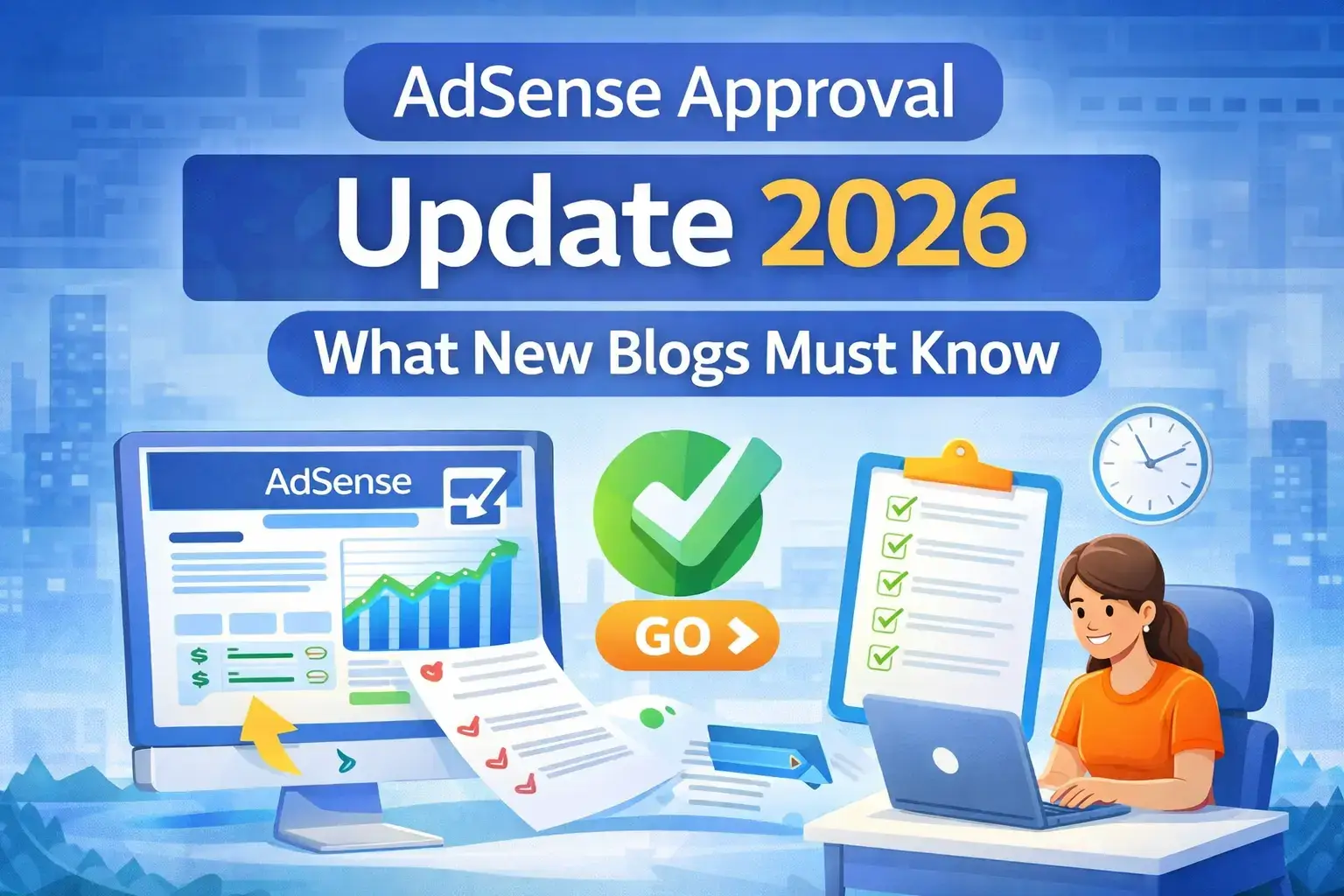
In 2026, thousands of new bloggers are shocked to see their Google AdSense applications rejected—even after publishing quality content and following basic rules.This AdSense approval update 2026 explains the latest rules, requirements, and approval trends that every new blog must know before applying.
If you recently started a blog and are confused about why AdSense approval feels harder than ever, you’re not alone.
Google has quietly changed how it reviews new blogs in 2026. Approval is no longer about publishing random articles or waiting for traffic. Instead, Google now focuses on trust, structure, content depth, and real user value—especially for brand-new websites.
This guide explains exactly what new blogs must know about AdSense approval in 2026, including:
- The latest approval trends
- The most common rejection reasons
- New requirements Google checks
- A beginner-friendly approval checklist
Whether your blog is 2 weeks old or 2 months old, this article will help you understand what Google really wants before approving AdSense—without myths, shortcuts, or outdated advice.
Google also evaluates overall page experience, including site speed, mobile usability, and visual stability, as explained in Google’s Page Experience guidelines.
📌 If you want to avoid rejection and apply with confidence, read this guide carefully from start to finish.
Contents
- 1 What Has Changed in Google AdSense Approval in 2026?
- 2 How Google Reviews New Blogs for AdSense Approval in 2026
- 3 How Google Reviews New Blogs for AdSense (2026 Process)
- 4 AdSense Approval Trends in 2026 (What’s Working Now)
- 5 New Minimum Content Expectations (2026)
- 6 Content Types That Get Approved Faster
- 7 Mandatory Pages for AdSense Approval (Non-Negotiable)
- 8 New UX & Design Requirements in 2026
- 9 Mobile Experience Is a Major Factor
- 10 Traffic Requirement: Truth in 2026
- 11 Domain Age & Hosting Reality (2026)
- 12 Does Domain Age Really Matter for AdSense Approval?
- 13 Most Common AdSense Rejection Reasons (2026)
- 14 Why Most New Blogs Get Rejected by AdSense in 2026
- 15 Beginner AdSense Approval Checklist (2026)
- 16 Content Standards Google Expects from New Blogs in 2026
- 17 How to Apply for AdSense in 2026 (Correct Way)
- 18 What to Do If Your Blog Gets Rejected
- 19 What to Do If Your AdSense Application Is Rejected (2026 Recovery Plan)
- 20 Final Thoughts: AdSense Approval in 2026
- 21 AdSense Approval Timeline: What to Expect in 2026
- 22 FAQs – AdSense Approval Update 2026
What Has Changed in Google AdSense Approval in 2026?
Google has become much stricter with new publishers.
Earlier:
- Thin content could pass
- Basic blogs got approved easily
- Minimal UX was acceptable
In 2026:
- Quality > Quantity
- User trust > Blog age
- Value > Automation
Google now evaluates websites using advanced AI + human review, focusing on whether your site deserves to show ads to real users.
Key Change Summary (2026)
| Old System | New System (2026) |
|---|---|
| Post count mattered | Content quality matters |
| Domain age mattered | Trust & structure matter |
| Basic pages worked | Detailed pages required |
| AI content passed | Thin AI content rejected |
📌 New blogs can still get approved, but only if they follow the correct setup.
How Google Reviews New Blogs for AdSense Approval in 2026
In 2026, Google AdSense approval is no longer a basic content-count check. Instead, Google uses a mix of automated systems and manual review to evaluate whether a website deserves ads.
When a new blog applies for AdSense, Google primarily checks three layers of quality.
According to Google AdSense official documentation, RPM and approval decisions depend on content quality, user experience, and advertiser demand rather than traffic alone.
1️⃣ Automated Quality Systems
Google first runs your website through automated systems that analyze:
- Content depth and originality
- AI-generated pattern detection
- Site structure and internal linking
- Page speed and mobile usability
- Indexation status
If your blog fails here, it may get rejected without manual review.
2️⃣ Manual Review Signals
If your site passes the automated stage, a human reviewer may check:
- Does the site look trustworthy?
- Is the content written for users or just for ads?
- Are pages complete and informative?
- Are About, Contact, and Privacy pages clearly visible?
This is where many new blogs fail — not because of traffic, but because the site looks unfinished or low-effort.
3️⃣ Long-Term Publisher Potential
Google now asks one key question:
“Is this website likely to grow into a long-term, useful publisher?”
Blogs that show:
- Clear niche focus
- Consistent publishing
- Helpful content structure
…have a much higher chance of approval, even with low traffic.
📌 Important:
Google does NOT expect perfection. It expects genuine effort and value.
How Google Reviews New Blogs for AdSense (2026 Process)
Google does NOT publish its internal checklist, but based on hundreds of real approvals and rejections, the review focuses on 4 core pillars:
1️⃣ Content Quality & Purpose
- Is the content original?
- Is it written for humans?
- Does it solve real problems?
2️⃣ Website Trust & Transparency
- Who runs this site?
- Can users contact you?
- Are legal pages present?
3️⃣ User Experience (UX)
- Mobile friendly?
- Easy navigation?
- No spammy elements?
4️⃣ Policy Safety
- Any restricted content?
- Misleading titles?
- Copyright issues?
❌ If any one pillar fails → rejection is very likely.
AdSense Approval Trends in 2026 (What’s Working Now)
Many beginners fail because they apply without understanding the AdSense approval update 2026 requirements.Understanding approval trends helps you avoid mistakes.
✅ What Google Likes in 2026
- Clear niche (not mixed topics)
- Informational & educational content
- Helpful long-form articles
- Clean WordPress design
- Human-edited content
- Beginner-friendly explanations
❌ What Google Dislikes
- AI-generated thin articles
- Copy-paste content
- “Get rich quick” tone
- Empty categories
- Auto-generated pages
- Poor mobile experience
📌 Blogs that look “made only for ads” usually fail.
New Minimum Content Expectations (2026)
There is no official post count, but real approval data shows a pattern.
Recommended Content Baseline
- ✅ 15–25 high-quality posts
- ✅ 800–1500 words per post
- ✅ Clear headings (H2, H3)
- ✅ Unique images or visuals
- ✅ Proper internal linking
📌 10 excellent articles beat 50 weak ones.
Content Types That Get Approved Faster
Best Content for New Blogs
- How-to guides
- Beginner tutorials
- Educational explainers
- Problem-solution articles
- Step-by-step guides
Risky Content for New Blogs
- Adult topics
- Gambling / betting
- Medical advice without sources
- Crypto hype content
- Piracy or downloads
- Aggressive affiliate reviews
👉 Start safe, expand later.
Mandatory Pages for AdSense Approval (Non-Negotiable)
Missing any of these pages is one of the top rejection reasons.
1️⃣ About Us Page
Must clearly explain:
- Who you are
- What the site is about
- Why users should trust you
❌ One-line About pages = rejection risk
✅ Write 300–500 words, human-style.
2️⃣ Contact Us Page
Must include:
- Working email address
- Contact form (recommended)
📌 Google checks if your site is reachable.
3️⃣ Privacy Policy Page
This is mandatory.
Must mention:
- Cookies
- Third-party ads
- Google AdSense usage
- Data collection
👉 Use a generator but customize it.
4️⃣ Terms & Conditions Page
Explains:
- Content usage
- User responsibility
- Liability disclaimer
📌 Footer-visible pages improve trust.
New UX & Design Requirements in 2026
Google now evaluates how real users experience your site.
Must-Have UX Checklist
- Mobile-responsive theme
- Clean font & spacing
- Simple navigation
- No popup spam
- No broken links
Strongly Recommended
- Fast loading speed
- HTTPS (SSL)
- Clear categories
- Professional layout
❌ Cheap-looking or cluttered blogs often fail review.
Mobile Experience Is a Major Factor
Over 70% of AdSense reviews happen on mobile view.
Before applying:
- Test mobile menu
- Check text readability
- Ensure no overlapping elements
- Test page speed
👉 Use Google Mobile-Friendly Test.
Traffic Requirement: Truth in 2026
Good news 👇
Traffic is NOT mandatory for AdSense approval.
But:
- Indexed pages help
- Some organic traffic helps
- Social traffic is acceptable
📌 Many sites with 20–50 daily visitors get approved.Even blogs with minimal traffic can earn later—this guide explains how to earn money from AdSense with low traffic once approval is granted.
Domain Age & Hosting Reality (2026)
Domain Age
- No fixed rule
- 2–4 weeks is usually enough
- Older domain ≠ guaranteed approval
Hosting
- Avoid free hosting
- Shared hosting is fine
- SSL is mandatory
❌ Free subdomain blogs have higher rejection rates.
Does Domain Age Really Matter for AdSense Approval?
One of the biggest myths is that AdSense requires an old domain.
Truth in 2026:
- There is no minimum domain age rule
- 2–4 weeks is often enough
- Indexation matters more than age
What Google Actually Cares About
Instead of domain age, Google checks:
- Are pages indexed?
- Is content accessible?
- Is the site stable and secure?
Hosting & Technical Trust Signals
Your hosting setup matters because it affects:
- Page speed
- Uptime
- Security
Reliable hosting sends a trust signal to Google.
📌 Free hosting and unstable servers still have higher rejection rates.Using reliable hosting improves site trust and performance—see the best web hosting options for WordPress bloggers to avoid technical rejection risks.
Most Common AdSense Rejection Reasons (2026)
If you get rejected, it’s usually because of one or more of these:
- Insufficient content
- Thin AI-generated articles
- Missing required pages
- Poor user experience
- Policy-violating niche
- Copyrighted images
- Misleading titles
📌 One bad page can block approval.
Why Most New Blogs Get Rejected by AdSense in 2026
AdSense rejections are frustrating, but most of them happen due to repeatable mistakes.
Let’s break down the real reasons behind most 2026 rejections.
🚫 1. Content Looks “Auto-Generated”
Even if AI tools are used, Google expects:
- Editing
- Personal insights
- Clear explanations
- No repetitive phrasing
Blogs with 20 posts that all “sound the same” are often rejected.
🚫 2. Website Feels Incomplete
Common signs of an incomplete blog:
- Very short About page
- No real contact information
- Empty categories
- Placeholder text
Google wants to see a finished product, not a draft.
🚫 3. Weak User Experience
Poor UX kills approval chances:
- Slow loading pages
- Broken menus
- Overcrowded layouts
- Bad mobile readability
Even great content can fail if the site experience is poor.
🚫 4. Mixed or Confusing Niche
A blog that covers:
- Jobs
- Crypto
- Health
- Gaming
…without a clear focus often fails approval.
📌 Google prefers one main topic, not everything at once.
Beginner AdSense Approval Checklist (2026)
Before clicking “Apply”, confirm all items below:
✅ 15–25 quality posts
✅ Clear niche focus
✅ About, Contact, Privacy, Terms pages
✅ Mobile-friendly design
✅ Original content
✅ No policy violations
✅ Clean navigation
✅ HTTPS enabled
👉 If all boxes are checked, approval chances are high.For a step-by-step breakdown, follow this complete AdSense approval checklist for 2026 that covers every requirement in detail.
Content Standards Google Expects from New Blogs in 2026
In 2026, Google doesn’t approve blogs just because they publish “a lot”.
Instead, Google looks at how content helps users.
✅ What High-Quality Content Looks Like
Approved blogs usually have content that:
- Answers one clear question per article
- Uses headings properly (H2, H3)
- Explains concepts in simple language
- Includes examples or steps
❌ What Low-Quality Content Looks Like
Rejected blogs often have:
- Very short introductions
- Rewritten versions of other blogs
- Overuse of keywords
- No internal linking
Ideal Content Structure (Recommended)
For best approval chances:
- 800–1,500 words per post
- Clear introduction
- Logical sections
- Helpful conclusion
📌 Even 12–15 excellent posts can outperform 40 weak ones.
How to Apply for AdSense in 2026 (Correct Way)
- Go to Google AdSense
- Sign in with Gmail
- Add your website URL
- Add AdSense code site-wide
- Submit for review
⏳ Review time:
- Usually 1–14 days
- Sometimes longer
📌 Don’t make major changes during review.
What to Do If Your Blog Gets Rejected
Don’t panic. Rejection is common.
Correct Way to Reapply
- Read rejection reason carefully
- Fix weak pages
- Improve content depth
- Add missing pages
- Wait 2–3 weeks
- Reapply
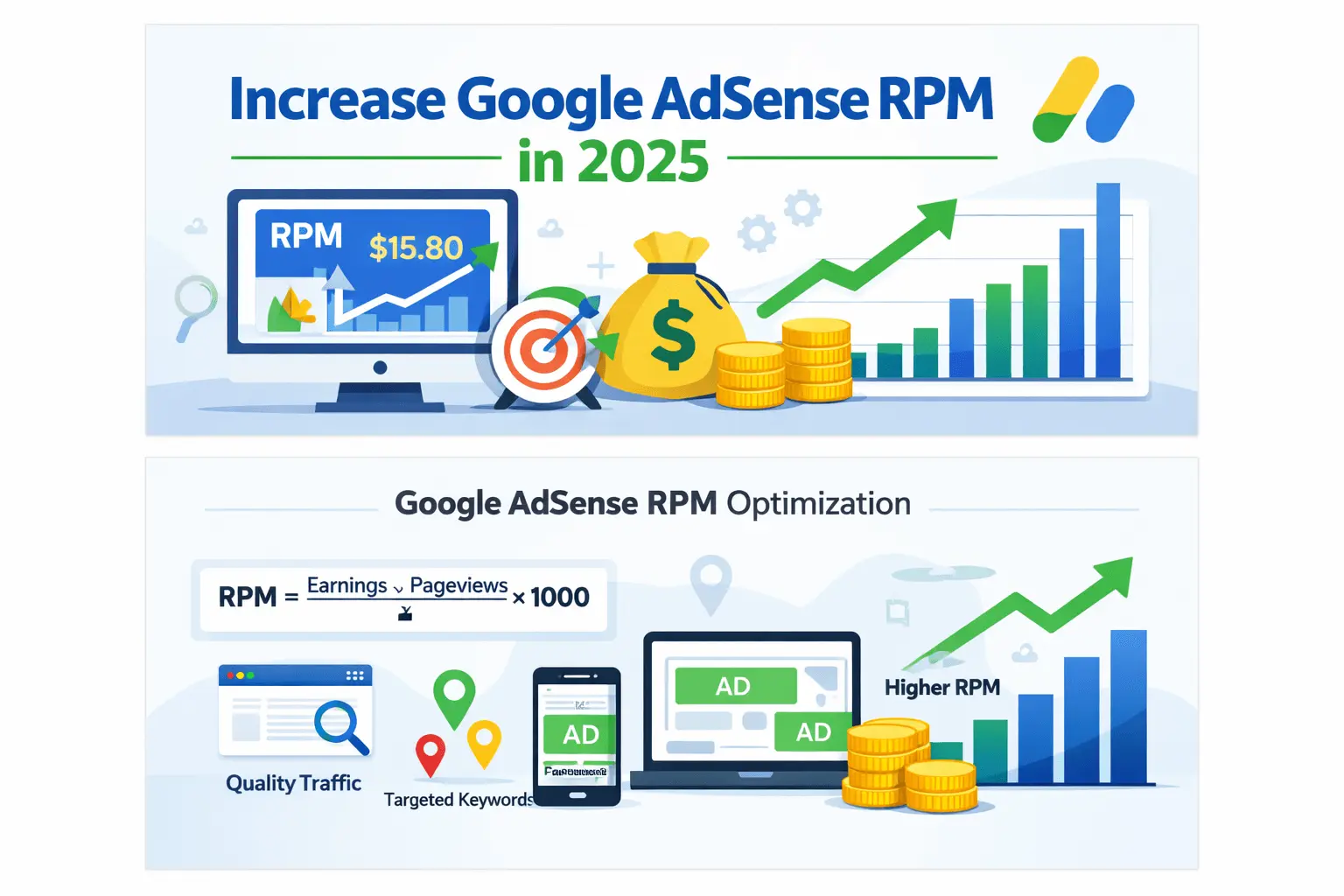
❌ Don’t reapply immediately without changes.After approval, your focus should shift to optimization—this guide on increasing Google AdSense RPM explains how publishers grow earnings safely.
What to Do If Your AdSense Application Is Rejected (2026 Recovery Plan)
Getting rejected doesn’t mean you’re banned.
Most blogs get approved on the second or third attempt.
Step-by-Step Recovery Plan
1️⃣ Read the rejection message carefully
2️⃣ Improve content depth
3️⃣ Fix UX and navigation issues
4️⃣ Add missing pages
5️⃣ Publish 2–3 new quality posts
6️⃣ Wait 7–14 days
7️⃣ Reapply
Important Rules After Rejection
- ❌ Don’t reapply immediately
- ❌ Don’t delete the site
- ❌ Don’t switch niches suddenly
📌 Treat rejection as feedback, not failure.
Final Thoughts: AdSense Approval in 2026
Getting Google AdSense approval in 2026 is absolutely possible, even for brand-new blogs.
The key is:
- Patience
- Quality
- Trust
- Correct setup
Google wants to approve real websites built for users, not shortcuts.
Build a clean, helpful blog—and approval will follow.
AdSense Approval Timeline: What to Expect in 2026
Typical Review Time
- First review: 1–14 days
- Re-review: 7–30 days
Some blogs get approved in 24–48 hours, others take longer.
What Happens During Review?
- Google crawls all pages
- Checks policy compliance
- Evaluates content quality
- Reviews site structure
📌 Making major changes during review is NOT recommended.
FAQs – AdSense Approval Update 2026
Q1. Can a new blog get AdSense approval in 2026?
Yes. New blogs can get approved if they meet quality, trust, and policy requirements.
Q2. How many posts are required for AdSense approval?
Generally, 15–25 high-quality posts are enough.
Q3. Does AI content get approved?
Only if it is well-edited, original, and helpful. Thin AI content gets rejected.
Q4. Is traffic required for approval?
No. Traffic helps but is not mandatory.
Q5. What is the biggest reason for rejection?
Insufficient content, missing pages, and poor UX.